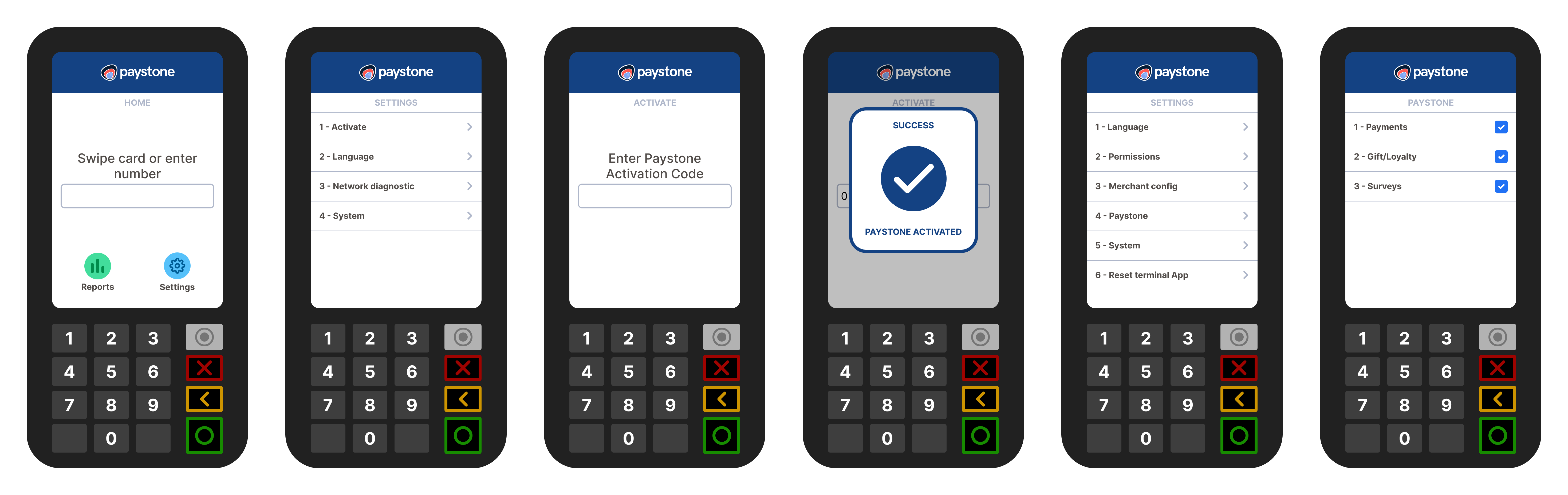
My research had me look at the current onboarding flows for our terminals. The existing onboarding flow for the user was disconnected from their back office account. The idea behind this direction was to allow them to set up their terminals as quickly as possible, and was partly due to the fractured nature of their two product offerings. Currently, products were activated were through separate long activation keys the user had to punch in manually for each product they paid for. Existing user research showed that this process was arduous and frustrating, which led us to believe that adding in a third long activation code would be unlikely to improve the process.
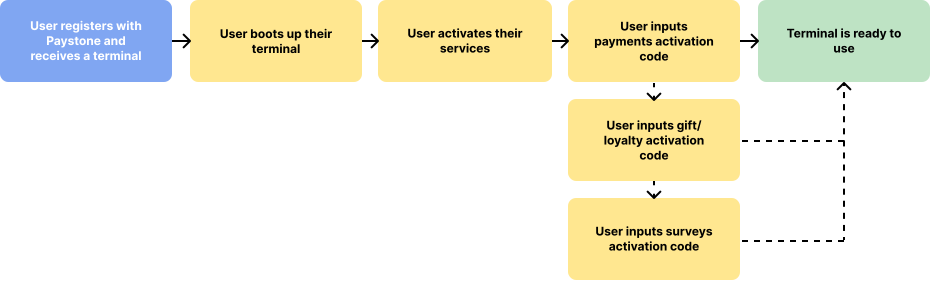
Current state flow diagram
With the goal of the product being one hub for all of the users products, the goal was to think of a way to manage terminals that would interact with all three product offerings. This hub would have to account for the locations the users business had, and how many terminals per location would be active. To get an understanding on how to tackle this problem, I investigated other companies involved in point-of-sale and payments. This led me to the new and revised flow based on how our competitors operated.

Propose flow diagram
Collecting my research and mapped out user flows, I presented my findings to both the development and product teams at Paystone. After highlighting the reduction in future efforts beyond the MVP, the product team was on board and we meet with the developers. While they appreciated the simplicity of the solution, the current architecture for the terminals was more complex than we initially anticipated. While the solution to integrate all services under one code was feasible, it would delay our initial release and would have to be done in a different sprint cycle. However, they were able to set up the framework for this solution in the interim by adopting a method similar to Googles OAuth token system.